 Anacortes Siding
 Storm Damage Roofing in Bow: What Makes This Area Different
Bow sits in that stretch of Skagit County where open farmland meets the shoreline, which means roofs here take a different kind of beating than roofs twenty miles inland. Homes get the full push of weather rolling off Samish Bay and Padilla Bay, with less tree cover and fewer windbreaks than you'd find in town. When a windstorm comes through, it tends to hit harder and longer out here, and the salt-laden air that comes with it accelerates wear on fasteners, flashing, and exposed metal in ways that inland Anacortes homes don't experience nearly as much.
We've repaired enough roofs in this stretch of the county to know the damage pattern is predictable: wind-lifted shingles on the windward slopes, granule loss from driving rain, moss colonies established in shaded valleys and north-facing sections, and flashing that's corroded faster than the shingles around it. Storm damage repair here isn't just about patching what broke in the last storm — it's about recognizing what the storm exposed that was already weakening underneath.
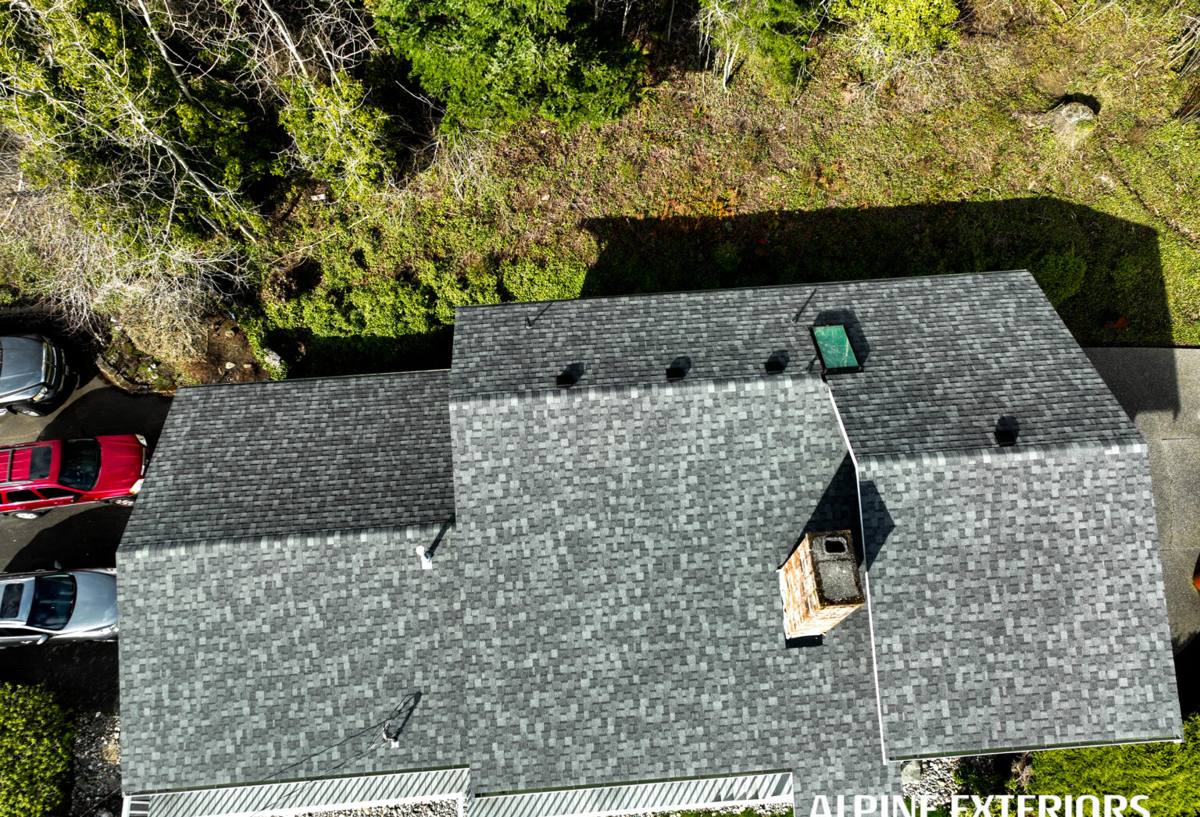
How Coastal Storms Actually Damage a Roof
It helps to understand what's really happening during a storm event, because it changes what "repair" should mean.
Wind Uplift and Shingle Loss
Wind doesn't just push on a roof — it creates negative pressure (lift) at edges, ridges, and corners first. That's why storm damage almost always shows up at the perimeter before it shows up in the field of the roof. Once a few tabs lift or crease, the seal strip underneath is broken permanently, even if the shingle looks fine afterward. It will lift again in the next storm, and the one after that, until it tears off or lets water in.
Wind-Driven Rain
Anacortes and the surrounding Skagit County shoreline get rain that doesn't fall straight down — storms off the water push it sideways, sometimes hard enough to drive moisture under shingle edges, behind step flashing, and through nail penetrations that would stay dry in a calmer climate. This is why storm repair work has to include flashing and underlayment checks, not just shingle replacement.
Moss and Trapped Moisture
Bow's tree lines, morning fog, and long damp season give moss plenty of time to establish, especially on north-facing and shaded slopes. Moss holds water against the roof surface long after the rest of the roof has dried, which softens shingles, lifts edges, and works its way under laps. A storm that would otherwise cause minor damage can turn into a real leak when it hits a section already compromised by moss.
Salt Air and Metal Corrosion
Being close to the water means faster corrosion on exposed fasteners, drip edge, flashing, and any unpainted metal components. Corroded fasteners back out or lose holding strength, and corroded flashing develops pinholes years before it would inland. Storm damage repair in this area has to account for metal condition even when the shingles themselves look okay.
Signs a Bow Roof Needs Storm Damage Repair
Some damage is obvious right after a storm. Other damage takes weeks to show up as a stain on a ceiling or a soft spot in the decking. Here's what we tell homeowners to look for after any significant wind or rain event:
- Shingles that are visibly lifted, curled, creased, or missing, especially along ridges, rakes, and eaves
- Granules collecting in gutters or downspout runoff — a sign of accelerated shingle wear
- Bent, lifted, or missing flashing around chimneys, skylights, vents, and roof-to-wall transitions
- New or worsening moss growth in shaded areas, particularly on the north slope
- Water stains on interior ceilings or in the attic, even faint ones
- Sagging or spongy-feeling sections of roof when walked (a sign of saturated decking)
- Debris — branches, needles, gravel — collected in valleys where water should be draining freely
- Gutters pulling away from the fascia or overflowing during rain, which points to blockage or improper pitch
None of these by themselves mean a full roof replacement is coming. But left alone through another wet Skagit County winter, most of them turn into a bigger repair than they needed to be.
What a Correct Storm Damage Repair Actually Involves
A lot of storm repair work in this region gets done as a quick patch — replace the obviously missing shingles, caulk a flashing seam, call it done. That approach misses the underlying cause and tends to fail again in the next storm. Our process is built around finding and fixing the cause, not just the symptom.
1. Full-Roof Assessment, Not Just the Damaged Spot
We look at the entire roof, not only the area that's obviously damaged. If wind lifted shingles on one slope, we check every slope for seal-strip failure, because wind damage is rarely isolated to one spot even if only one spot leaked.
2. Decking and Underlayment Check
Where there's been any sign of water intrusion, we check the decking underneath for soft spots, delamination, or rot before covering it back up. Repairing shingles over compromised decking is a short-term fix that costs more to undo later.
3. Flashing and Metal Inspection
Given how fast salt air corrodes exposed metal here, we inspect flashing condition as part of every storm repair, not as an afterthought. Corroded step flashing, counter-flashing, or drip edge gets flagged and replaced where it's a real risk, not just when it's already failed.
4. Moss and Debris Removal Where Relevant
If moss or trapped debris contributed to the failure, we clear it as part of the repair and talk through options for keeping it from coming back, rather than leaving the roof to re-fail from the same cause next season.
5. Matching Materials and Proper Tie-In
Patch repairs done with mismatched shingles or improper layering create their own weak points. We match materials as closely as possible and tie new work into the existing roof correctly — proper overlap, proper fastening pattern, proper sealing — so the repair performs like part of the roof, not like a patch on top of it.
Repair vs. Replacement: How We Help You Decide
| Factor | Repair Usually Makes Sense | Replacement Should Be Considered |
|---|---|---|
| Age of roof | Under 15 years, in otherwise good condition | Nearing or past typical asphalt shingle lifespan |
| Extent of damage | Isolated to one slope or a few sections | Widespread across multiple slopes |
| Decking condition | Solid, no rot or soft spots found | Soft spots or rot found in more than one area |
| Storm frequency | First significant damage event | Repeated storm damage over several seasons |
| Underlying material | Shingles still sealing and holding granules well overall | Widespread granule loss, brittle shingles elsewhere on the roof |
This table is a starting point, not a verdict — the right call depends on what we actually find on your roof, which is why we walk it in person before recommending either path.
Our Process, Start to Finish
- Contact and scheduling — we set up a time to walk the roof, usually within a few days depending on storm backlog
- On-site inspection — a full-roof walk-through, not just a look at the reported problem area, including attic access if there's any sign of interior moisture
- Written assessment — what we found, what's causing it, and what it will take to fix correctly
- Estimate — a clear breakdown of repair scope and cost, with options if there's a legitimate repair-vs-replace decision to make
- Repair work — scheduled around weather windows, since roofing work in this climate depends on dry conditions to do it right
- Final walk-through — we confirm the repair with you before we consider the job done
Why It Matters to Hire a Crew That Already Works This Area
Storm damage repair isn't a one-size-fits-all trade. A crew that mostly works drier, more sheltered neighborhoods can miss things that are routine for anyone working the Anacortes and Skagit County shoreline regularly — how far moss has typically progressed by a given point in the season, which flashing details tend to corrode first in salt air, how wind tends to hit a property with open exposure versus one tucked behind trees. Knowing the local pattern means we're not guessing at causes — we're checking against what we already know tends to go wrong out here, then confirming it on your specific roof.
There's also a practical side to using a local crew: availability after a storm. When a wind event moves through Skagit County, every roofing company gets a wave of calls at once. Crews with an established local presence and a real supply chain for materials tend to get to legitimate repairs faster than crews traveling in from farther away, especially for anything involving flashing or specialty fasteners suited to a marine climate.
What to Do Immediately After Storm Damage
- Photograph any visible damage from the ground if it's safe to do so — do not get on the roof yourself after a storm
- Check the attic for fresh water stains or drips, especially after heavy wind-driven rain
- Note which direction the wind was coming from and roughly when the damage was first noticed
- Cover confirmed active leaks with a temporary tarp only if it can be done safely, or leave it to a professional
- Avoid caulking or sealing anything yourself before an inspection — it can hide the real extent of the damage from an assessor
- Call for an inspection promptly; delayed repairs on wind-lifted shingles tend to worsen with the next rain, not stay the same
Maintenance That Reduces Storm Damage Over Time
A roof that's maintained well between storms simply takes less damage when the weather turns. For Bow-area homes specifically, that means staying ahead of moss growth before it establishes in shaded valleys, keeping gutters and downspouts clear so wind-driven rain has somewhere to go, and having flashing and fastener condition checked periodically rather than only after something fails. None of this eliminates storm risk — no maintenance schedule stops a real windstorm — but it does mean a storm finds a roof in good condition rather than one already compromised, which is usually the difference between a minor repair and a major one.
Get a Straightforward Assessment
If a recent storm has left you with lifted shingles, a new leak, or just some uncertainty about what your roof went through, we're glad to take a look. We'll walk the roof, tell you honestly what we find, and lay out what it would take to fix it right — no pressure, no upsell to a full replacement unless that's genuinely what the roof needs. Use the form below to request a free estimate.