 Anacortes Siding
 Siding Repair Looks Different on the West Side of Anacortes
Homes on the west side of Anacortes sit closer to the water than almost anywhere else in Skagit County, and that changes what "normal wear" looks like on a wall. Salt-laden air off the channel, wind-driven rain that hits siding sideways instead of straight down, and a moss season that can run half the year all work on exterior materials in ways that inland Anacortes homes simply don't experience at the same rate. A siding repair call in this part of town is rarely a cosmetic fix. It's usually a moisture or fastener problem that's been building for a while and finally showed itself.
We work on siding across Anacortes and the surrounding Skagit County area, but West Anacortes gets its own approach because the failure patterns are consistent enough that we can usually tell, before we even get a ladder out, roughly what we're going to find.
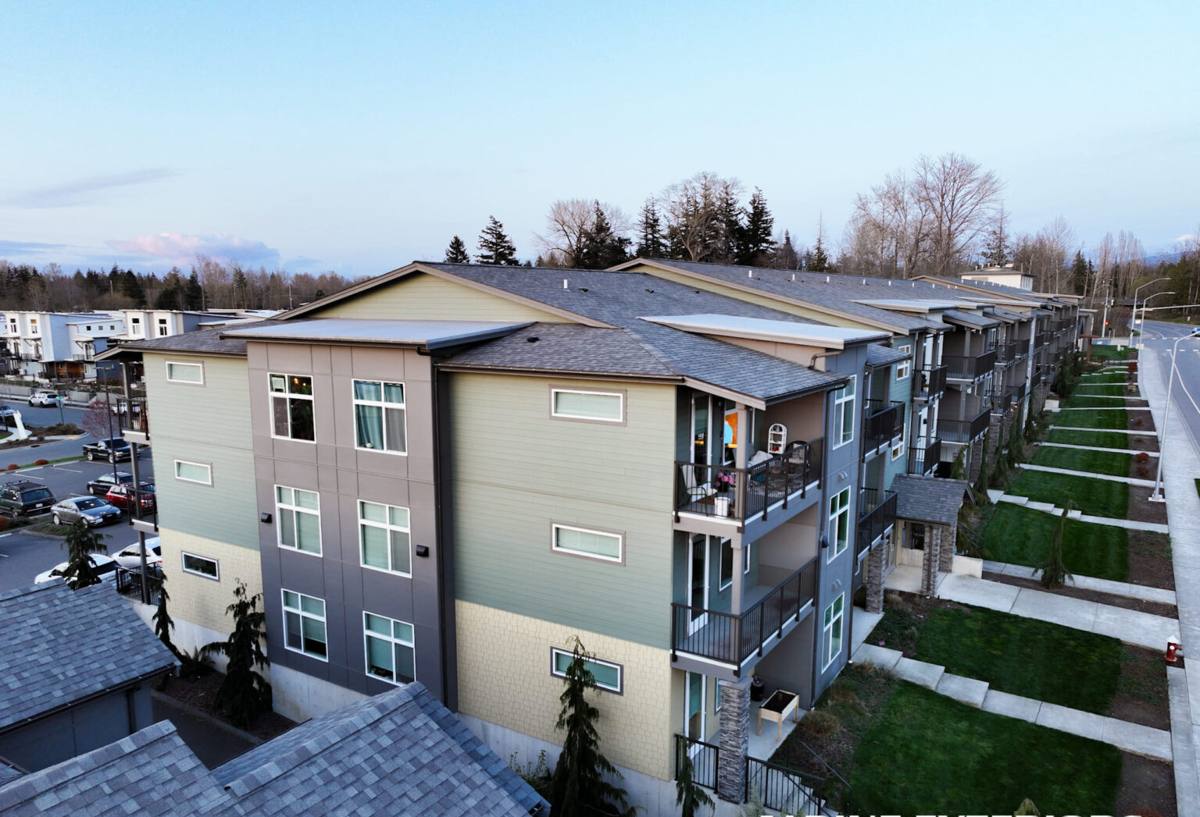
What West Anacortes Siding Is Actually Up Against
Salt Air and Metal Fatigue
Salt in the air doesn't just sit on the surface of your siding — it works into fasteners, flashing, and any exposed metal trim. Over years, that accelerates corrosion in nails and screws long before the siding material itself would normally need attention. When a fastener corrodes and loses its grip, a siding panel or board can work loose, and once it's loose, water gets behind it. That's the point where a small problem becomes a rot problem.
Driving Rain and Wind Exposure
Because homes on this side of Anacortes are more exposed to wind coming off the water, rain doesn't just fall — it drives sideways into seams, laps, and trim joints that were designed for water running down, not water being pushed in. Siding systems rely on overlaps and flashing details to shed water in one direction. Wind-driven rain defeats a lot of those details if they weren't installed with enough margin, or if caulking and sealant have started to fail.
A Long Moss and Algae Season
Shade, moisture, and mild temperatures make this part of Skagit County very hospitable to moss and algae growth on north- and west-facing walls. Beyond the cosmetic staining, moss holds moisture directly against the siding surface for extended periods, which is exactly the condition that leads to soft spots, paint failure, and eventually substrate damage on materials that aren't built to handle sustained dampness.
The Repair Issues We See Most Often in This Area
- Fastener failure at panel edges — corrosion or loosening lets panels shift, crack, or pop free of the wall.
- Soft or swollen sections near ground level, under windows, or below rooflines where water has been draining onto siding repeatedly.
- Failed caulking and trim joints that let wind-driven rain track behind the siding at corners and window/door surrounds.
- Moss and algae staining that's progressed past a surface issue into visible discoloration under the coating itself.
- Cracked or split boards from age, minor impact, or moisture-driven expansion and contraction cycles.
- Gaps opening up at flashing and lap joints, usually first noticed as a drafty spot or a damp smell inside near an exterior wall.
What a Correct Repair Actually Involves
A lot of siding "repairs" in coastal areas are really just patches — caulk over a crack, a fresh coat of paint over a stain, a replacement piece nailed in without checking what's happening behind it. That approach might look fine for a season, but on a house exposed to this much salt air and rain, it usually just delays the real problem and lets it spread.
A repair done right starts with finding out why the siding failed in that spot, not just patching the symptom. That means:
- Removing enough of the damaged material to see the sheathing and framing behind it, not just the surface.
- Checking for water intrusion, soft wood, or hidden rot before anything new goes back on.
- Correcting the underlying cause — a flashing detail, a failed seal, a drainage path — so the same spot doesn't fail again in a year or two.
- Matching the replacement material's profile, reveal, and finish closely enough that the repair doesn't stand out as a patch job.
- Re-sealing and fastening with hardware rated for the exposure this side of Anacortes actually gets.
Skip any one of those steps and you've bought yourself a repeat visit — usually after the next wet winter.
Repair or Replace? How We Help You Decide
Not every siding problem in West Anacortes needs a full re-side, and we're not going to tell you it does. But there's a point where patching individual sections stops making financial sense compared to replacing a full wall or elevation. Here's generally how we walk homeowners through that decision:
| Signal | Usually Points To |
|---|---|
| One or two isolated soft spots or cracked boards | Targeted repair |
| Damage concentrated on one wall facing the water or prevailing wind | Repair now, evaluate that elevation closely |
| Rot or soft sheathing found behind multiple repair spots | Broader repair or partial re-side |
| Siding material is original, aging, and failing in several unrelated areas | Full replacement is usually more cost-effective long term |
| Recurring moss/algae staining across most of the house | Repair addresses symptoms; replacement with a moisture-resistant material addresses the cause |
We'll always give you the honest read on which category your house falls into — including when the answer is "this is a repair, not a replacement job," even if that's the smaller invoice.
Why We Repair With James Hardie Fiber Cement — Not Whatever's Already On the Wall
When a repair calls for new material — a replaced section, a patched corner, a full elevation — we do that work in James Hardie fiber cement, not vinyl, not LP SmartSide, not a lookalike cement board. That's a standard we hold across every job, not just new installs. Fiber cement doesn't absorb water the way wood-based siding can, it doesn't provide the same food source for moss and algae growth, and it holds paint and factory finish far longer in salt-air exposure than most alternatives.
Where the practical challenge comes in on a repair (versus a full re-side) is matching an existing product. If your home already has Hardie siding, we can typically match the plank width, texture, and ColorPlus finish closely. If your home has a different siding material and only needs a partial repair, we'll be upfront about what a clean match looks like and when it makes more sense to plan a fuller replacement in Hardie rather than mixing materials. We won't install vinyl or LP patches into a repair just because it's what's already there — we'd rather tell you the honest trade-off than hand you a fix we don't believe in.
Our Siding Repair Process
1. On-Site Inspection
We look at the damaged area and the surrounding siding, check for hidden moisture with the tools that actually tell us something (not just a visual glance), and identify the likely cause — not just the visible symptom.
2. Straight Answer, In Writing
You get a clear explanation of what we found, what caused it, and what it will take to fix it correctly — including if we think a repair is premature or if it should be a bigger scope. No pressure to upsell a repair into a full re-side you don't need.
3. The Repair Itself
Damaged material comes out, the substrate gets checked and addressed, and new material goes in matched as closely as the situation allows, sealed and fastened to hold up against this side of Anacortes' wind and rain exposure.
4. Final Check
We walk the repair with you before we call it done, so you know exactly what was fixed and why.
Signs You Should Get a Siding Repair Looked At
- Cracked, split, or visibly warped boards or panels
- Soft spots you can press with a hand or feel give underfoot on a ladder
- Persistent moss or algae staining that doesn't wash off, or is spreading
- Peeling or bubbling paint in one concentrated area rather than the whole house
- Gaps, cracks, or missing caulk at trim, corners, and window/door surrounds
- Damp smells, staining, or soft drywall on an interior wall that backs up to exterior siding
- Visible daylight or drafts at siding seams from inside an attic or crawlspace
If you're seeing more than one of these, especially on a wall facing the water or prevailing weather, it's worth having it looked at before the next stretch of driving rain.
Why Hire a Crew That Already Works West Anacortes
Siding repair on this side of Anacortes isn't the same trade skill as repair work fifteen miles inland. A crew that already understands how salt air chews through fasteners, how wind-driven rain finds its way past standard flashing details, and how long moss season actually runs here is going to diagnose the real cause faster and fix it right the first time. We're not guessing at what coastal Skagit County exposure does to a house — we see it on a regular basis, house after house, on this specific stretch of the county.
If you've got a section of siding that's cracked, soft, stained, or just not sitting right, we're happy to come take a look. A free, no-pressure estimate gets you an honest answer on whether it's a small repair, a bigger scope, or something that can wait — fill out the form below to get started.