 Anacortes Siding
 Storm Damage Roof Repair Built for West Anacortes' Weather
West Anacortes sits close enough to the water that a storm here rarely arrives as simple rainfall. It's wind pushing rain sideways under shingle edges, salt air working on exposed metal, and gusts off the water carrying branches and debris onto roof planes that are already saturated from the last system that came through. When storm damage happens to a roof in this part of Anacortes, the repair has to account for all of that, not just patch the spot that's obviously leaking.
We work on roofs, siding, windows, and decks across Skagit County, and storm damage repair is one of the calls we get most consistently in West Anacortes specifically, given its exposure to wind and moisture coming off the water. This page covers what actually happens to a roof here during a storm, what a correct repair involves, and how to tell a real fix from a quick patch that will fail again next season.
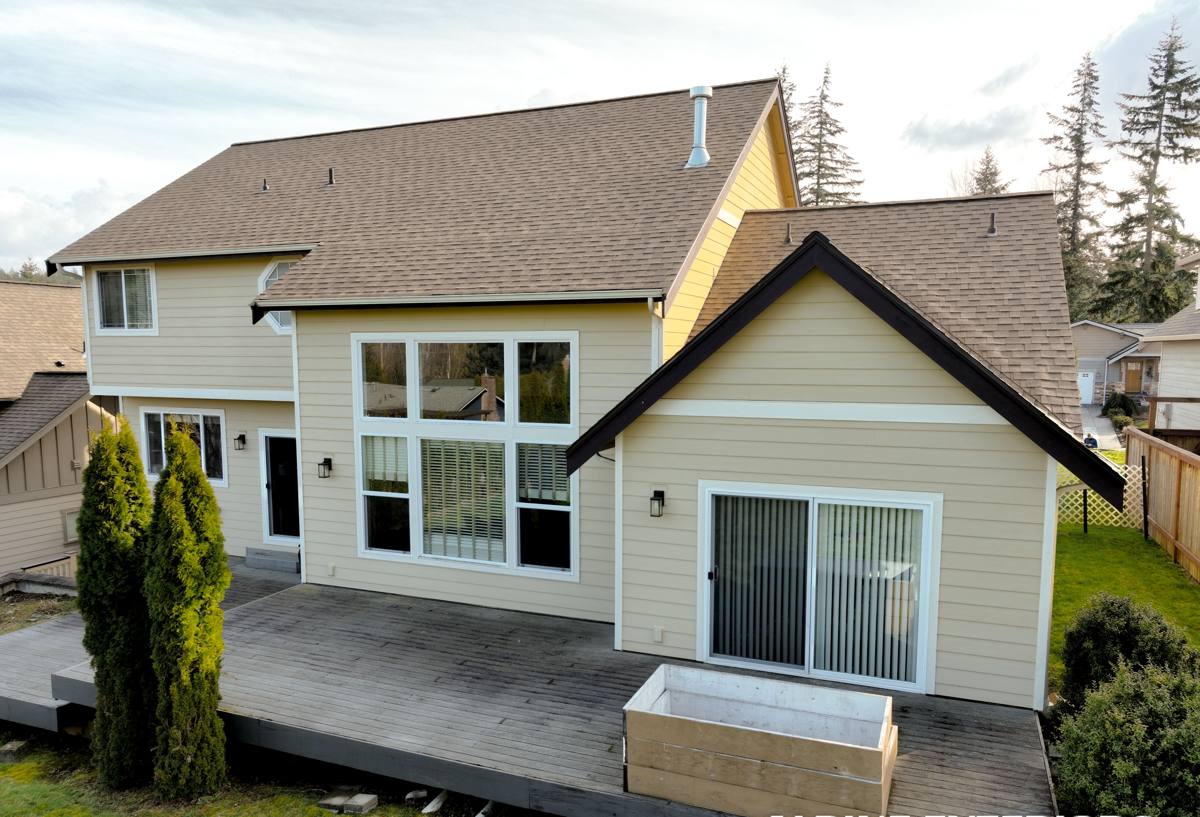
What Storms Actually Do to a West Anacortes Roof
Wind-Driven Rain and Lifted Shingles
Rain that falls straight down is manageable for almost any roof. Rain driven sideways by wind off the water is a different problem — it gets pushed up under shingle tabs, around chimney flashing, and into roof valleys that weren't designed to handle water moving against gravity. A roof that's been fine for years can develop a leak during one bad windstorm simply because the wind direction pushed water into a seam that's never been tested that way before.
Salt Air and Accelerated Corrosion
West Anacortes' proximity to Puget Sound means roofing metal — flashing, fasteners, gutter hardware, roof vents — deals with more corrosive exposure than the same roof would face further inland. Corrosion that would take a decade to matter elsewhere can compromise a flashing seal or a fastener here in less time, and a storm is exactly when that weakened point gets tested hardest.
Falling Debris and Impact Damage
Wind storms bring down branches, and in a wooded or partly wooded lot, that's a real risk to roofing material. Impact damage can crack or dislodge shingles, dent metal roofing, or puncture underlayment in ways that aren't always obvious from the ground. A single fallen branch can also compromise flashing around a vent pipe or chimney without leaving an obvious visual sign until the next rain finds the gap.
Moss Season Compounding Storm Damage
Skagit County's long moss season means a lot of roofs already carry some moss and moisture retention going into storm season. A roof plane that's holding moss is holding water longer, and it's also more likely to have granule loss or softened underlayment underneath it — exactly the kind of pre-existing weak point that a storm turns into an active leak.
Reading the Damage Correctly Before Any Repair Starts
Storm damage isn't always where the leak shows up inside the house. Water can travel along the roof deck or down a rafter before it finally stains a ceiling, which means the visible sign of a problem and the actual source of a problem are often in different places. Before we recommend any repair, we look at the roof itself — not just the spot where the homeowner noticed a drip.
That inspection covers the obvious things — missing or cracked shingles, dented metal panels, visibly lifted flashing — but also the less obvious ones: soft spots in the decking underfoot, granule loss patterns that suggest wind lift rather than normal wear, and whether water has tracked along the underlayment away from the original point of entry. Skipping this step is how a homeowner ends up paying for a patch on the wrong section of roof while the real leak keeps going.
What a Correct Storm Repair Actually Involves
Matching the Existing Roofing Correctly
Whenever possible, a storm repair should use material that matches the existing roof in type, profile, and where practical, color and age-appropriate appearance. Mismatched shingles or panels aren't just a cosmetic issue — they can create a slightly different water-shedding profile at the seam between old and new material, which is exactly where a future leak likes to start.
Flashing and Underlayment, Not Just Shingles
A lot of storm repairs that fail again within a year or two failed because the contractor replaced the visible shingles but didn't address the flashing or underlayment underneath. If wind-driven rain got past the shingles once, the flashing and underlayment in that area need to be evaluated and, where compromised, replaced — not just covered back over.
Checking the Roof Deck Itself
If water has been getting into a section of roof for any length of time before the storm damage was noticed, the plywood or OSB decking underneath can be softened or delaminated. Setting new roofing material over a compromised deck doesn't fix the problem — it just hides it until the deck fails structurally. Any storm repair worth doing includes a check of deck condition in the affected area.
Securing Against the Next Storm, Not Just This One
A repair that only restores the roof to its pre-storm condition isn't necessarily a good repair if that condition was already marginal. Where we find fastening patterns, flashing details, or ventilation that were contributing to the vulnerability, we address those as part of the repair so the same section of roof isn't the first thing to fail in the next storm.
Repair or Replace: How We Help You Decide
Not every storm-damaged roof needs a full replacement, and we don't default to recommending one. The right call depends on the roof's age, how much of the surface is affected, and what the inspection finds underneath the visible damage.
| Situation | Typical Recommendation | Why |
|---|---|---|
| Isolated shingle or flashing damage on a roof under 15 years old | Targeted repair | Localized damage on a roof with plenty of remaining life is usually a straightforward, cost-effective fix |
| Storm damage on a roof already near the end of its rated life | Replacement | Investing in repair on a roof that's already due for replacement rarely makes financial sense |
| Widespread wind lift across multiple roof planes | Case-by-case, often broader repair or partial replacement | Extensive lift often signals underlying fastening or ventilation issues beyond a single patch |
| Deck damage found underneath storm-damaged shingles | Deck repair plus roofing replacement in that section | Roofing material can't be reliably installed over a compromised deck |
We'll walk you through what we actually find on your roof and explain the reasoning, rather than defaulting to whichever option is easier to sell.
Documenting Storm Damage for Insurance
Most storm damage repairs in West Anacortes involve a homeowner's insurance claim, and how the damage is documented matters for how smoothly that process goes. We're glad to provide the kind of detailed, dated documentation an adjuster expects to see.
- Photos of the damage from the roof itself, not just what's visible from the ground
- A written description of what was damaged and the likely cause (wind, impact, or a combination)
- Notes on any pre-existing condition versus new storm damage, since insurers distinguish between the two
- A clear, itemized repair estimate that an adjuster can review against the claim
- Timeline documentation if temporary protection (tarping) was needed before permanent repair
We're not a public adjuster and we don't handle the claim itself, but a clear, honest, well-documented assessment from the contractor doing the actual repair work tends to make that process go more smoothly for the homeowner.
Our Process for a West Anacortes Storm Call
When a storm has damaged a roof, the sequence matters. Getting it wrong — or skipping steps to move faster — is how temporary problems turn into permanent ones.
- Immediate assessment, including temporary protection like tarping if the roof is actively leaking
- Full inspection of the affected area and adjacent sections, checking flashing, underlayment, and deck condition, not just the visible damage
- A written scope of repair with photos, explained in plain terms
- Material matched to the existing roof wherever the roof's age and condition make that practical
- Repair work, including any flashing, underlayment, or deck work the inspection turned up as necessary
- A final check of the repaired area and surrounding sections before we consider the job done
We don't skip from step one to step five. A roof that's been through storm damage deserves the full look, even when the visible problem seems minor.
Why a Local Skagit County Crew Matters for Storm Response
A crew that already works West Anacortes and the surrounding waterfront communities has seen how wind-driven rain, salt exposure, and falling debris actually behave on real roofs here, storm after storm — not just how a shingle performs on a manufacturer's spec sheet. That translates into practical judgment: knowing which roof orientations in this part of Anacortes take the worst of a west or southwest storm, which flashing details are worth extra time given the salt exposure, and how to tell storm damage apart from long-term moss-related wear that was already present before the storm hit. It also means faster response when a storm has left a roof actively leaking, since we're not driving in from outside the area to get eyes on it.
Preventing the Next Storm From Doing the Same Damage
Once a storm repair is done, a few ongoing habits make a real difference in how the roof holds up through the next one. Regular moss removal on shaded or damp-prone roof planes keeps water from being held against the roofing material longer than it should be. Keeping gutters and downspouts clear ensures storm runoff actually leaves the roof instead of backing up under the roofline. And a periodic inspection — ideally before the wettest and windiest months of the year — catches a loosening flashing seam or a weakening fastener while it's still a five-minute fix instead of the next storm's leak.
If a storm has left your West Anacortes roof damaged, or you want a professional look at a roof you're worried might not hold up to the next one, we're glad to take a look and give you a straightforward, honest read on what it actually needs. Reach out using the form below to schedule a free, no-pressure estimate.